View Profile
The death of a loved one is always devastating, and being involved in a coroner’s inquest can make an already difficult time even more overwhelming. An inquest is a legal investigation carried out by a Coroner to establish who has died, and when, where and how they came by their death. It is a fact-finding process rather than one that determines blame or liability, but the findings can be crucial in understanding what happened and whether further legal action may be appropriate.
At Wollens, our experienced inquest solicitor provides compassionate guidance and expert representation for families throughout the inquest process. We can help you prepare for hearings, explain the Coroner’s procedures, review medical records and ensure your questions are properly addressed. Where concerns about medical negligence or the standard of care arise, we can advise you on your legal options following the conclusion of the inquest. We are committed to supporting families with sensitivity, clarity and practical advice when they need it most.
An inquest can raise important questions about the care a loved one received before their death, particularly where concerns exist about medical treatment, hospital care, GP services, care homes or mental health services. In some cases, the Coroner may decide that the circumstances require an Article 2 inquest, which involves a wider investigation into whether a public authority fulfilled its duty to protect life.
Having experienced legal representation can help ensure that the relevant evidence is properly examined and that your family’s concerns are fully explored. At Wollens, we work closely with families throughout the inquest process, liaising with the Coroner, reviewing medical records, instructing independent experts where appropriate and representing clients at hearings. Following the conclusion of an inquest, we can also advise whether there are grounds for a medical negligence claim or other legal action. Our priority is to help families obtain answers, accountability and, where appropriate, access to compensation and support.
This practice is extremely professional, yet approachable and friendly. I feel in very safe hands and that my solicitor understands my requirements fully.
My contact is Elizabeth Larner. She is so knowledgeable, helpful and professional and doesn’t mind going over things many times so I totally understand the process. She is also very caring and understands the upset and despair that goes with a medical negligence claim.
Catherine Pinnegar goes above and beyond in helping you with any questions about your case. Nothing is too much trouble and she always keeps me informed in any updates, you never have to chase her for information. I always highly recommended Wollens due to her exceptional service.
Very informative, professional and take the time to understand how you have been impacted. They treat you as a person and not a number.
Catherine Pinnegar and Hannah Goodman have excelled themselves to be kind, caring and always keep you informed of how the case is coming along! I will always recommend them and the firm.
A clinical negligence team with a great breadth of knowledge and a clear understanding of what is required to get the best results.
Elizabeth Larner and Catherine Pinnegar have wonderful client skills and are pragmatic, but are also tenacious and deliver excellent results.
A very efficient and effective team. A breath of fresh air and no nonsense.
The team has demonstrated excellence in the claimant clinical negligence market. They have an impressive level of expertise in this field. They are able to progress complex cases through to very good outcomes for their clients.
Elizabeth Larner and Catherine Pinnegar are the-go to clinical negligence specialists in their area.
Makes a difficult time easier to deal with. Great support
Elizabeth Larner is the solicitor I’ve been dealing with and I’m very lucky to have her acting for me. She has kept me informed at every stage.
Wollens’ clinical negligence practice have a growing reputation nationally, having proved themselves as leaders in the field in the South West.
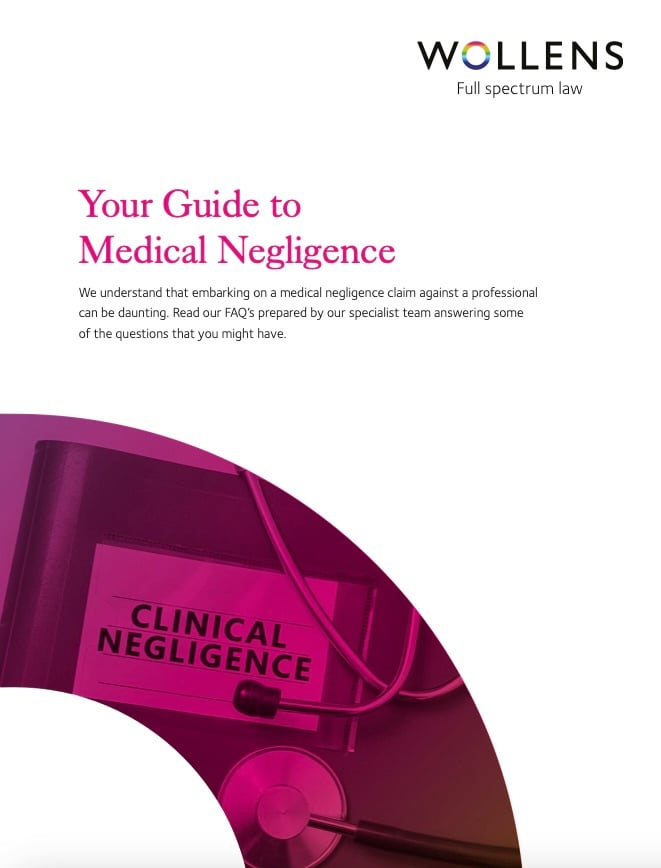
It can be difficult to know where to start if you believe medical care has caused you or someone close to you harm. Our free guide answers common questions about medical negligence claims, including what you may need to prove, time limits and different types of claim.
Download the free guideFree PDF guide · Opens in a new tab
Please complete this form so we can help assist you. A member of our team will get back to you shortly.
"*" indicates required fields
Find answers to common questions about Coroner’s inquests, legal representation, Article 2 inquests, medical negligence concerns, hearing preparation and what happens after an inquest.
A Coroner’s inquest is a formal investigation into a death that was violent, unnatural, unexpected or where the cause is unknown. Its purpose is to establish who died and when, where and how the death occurred. An inquest is a fact-finding process and does not determine criminal guilt or civil liability.
An inquest may be opened where the cause of death is unclear, the person died unexpectedly, the death may have resulted from an accident or neglect, or the person died while in state detention. The Coroner will decide whether an investigation and formal hearing are required.
The Coroner will usually seek to establish the identity of the deceased and when, where and how they came by their death. In some cases, the investigation may examine the wider circumstances, including the care or treatment provided before the death.
Legal representation is not compulsory, but it can be valuable where the circumstances are complex, medical treatment is in question or public authorities are involved. An experienced inquest solicitor can help you understand the evidence, prepare questions and ensure your family’s concerns are properly explored.
An Article 2 inquest involves a wider investigation where there may have been a failure by a public authority to protect life. It may examine not only the immediate cause of death but also the broader circumstances and whether systemic failings contributed to what happened.
Certain family members may be recognised as interested persons and can usually ask relevant questions of witnesses. Questions must help the Coroner investigate the circumstances of the death rather than seek to assign blame. A solicitor can help prepare appropriate questions and ask them on your behalf.
Evidence may include medical records, witness statements, post-mortem reports, internal investigation documents, expert reports, policies and oral evidence from healthcare professionals or other witnesses. The evidence considered will depend on the circumstances surrounding the death.
An inquest does not determine civil liability or award compensation. However, it may identify failings in medical treatment or care and provide important evidence about what happened. Following the inquest, a solicitor can advise whether there may be grounds for a separate medical negligence claim.
The Coroner may return a short-form conclusion, such as natural causes, accident, suicide or unlawful killing, or provide a narrative conclusion explaining the circumstances of the death in more detail. The appropriate conclusion depends on the evidence heard.
If the Coroner believes action is needed to reduce the risk of similar deaths, they may issue a Prevention of Future Deaths report. The organisation receiving the report must respond and explain what action has been taken or is proposed.
Potentially. An inquest and a civil compensation claim are separate legal processes. Evidence revealed during the inquest may help establish whether negligent treatment contributed to the death. Wollens can review the findings and advise you on any further legal options.
Wollens can guide your family through the inquest process, review the available evidence, liaise with the Coroner’s office, help prepare questions and provide representation at the hearing. We can also advise on possible medical negligence or compensation claims once the inquest has concluded.
Our Clinical Negligence team can also advise on a wide range of medical negligence claims.